Denia does not shout. While other Costa Blanca resorts compete on the height of their hotel towers and the volume of their beachfront bars, this old port town at the foot of the Montgó gets on quietly with the things it has always done well: fishing, eating, and messing about in boats. If Benidorm is the Costa Blanca turned up to eleven, Denia is the anti-Benidorm — a working harbour, a castle on a hill, a food scene serious enough to have earned the town UNESCO City of Gastronomy status, and a coastline that rewards anyone willing to see it from the water.
And seeing it from the water is the point of this guide. Denia is one of the best boat-trip bases on the Spanish Mediterranean coast, and most visitors never realise it. Here is everything you need to know to plan a day afloat: what the coastline actually offers, the rules that apply, the honest truth about sunsets here, and how to choose between the different ways of getting out on the sea.
Why Denia Works So Well as a Boat Base
Start with the harbour itself. Marina de Dénia is a proper, full-service marina with 409 berths, of which 209 are reserved for visiting boats — a generous visitor allocation by Mediterranean standards — and an entrance carrying around 7 metres of depth, which means everything from small day boats to substantial yachts can come and go without drama. The marina sits right against the town, so you step off a boat and into a street of tapas bars rather than a taxi.
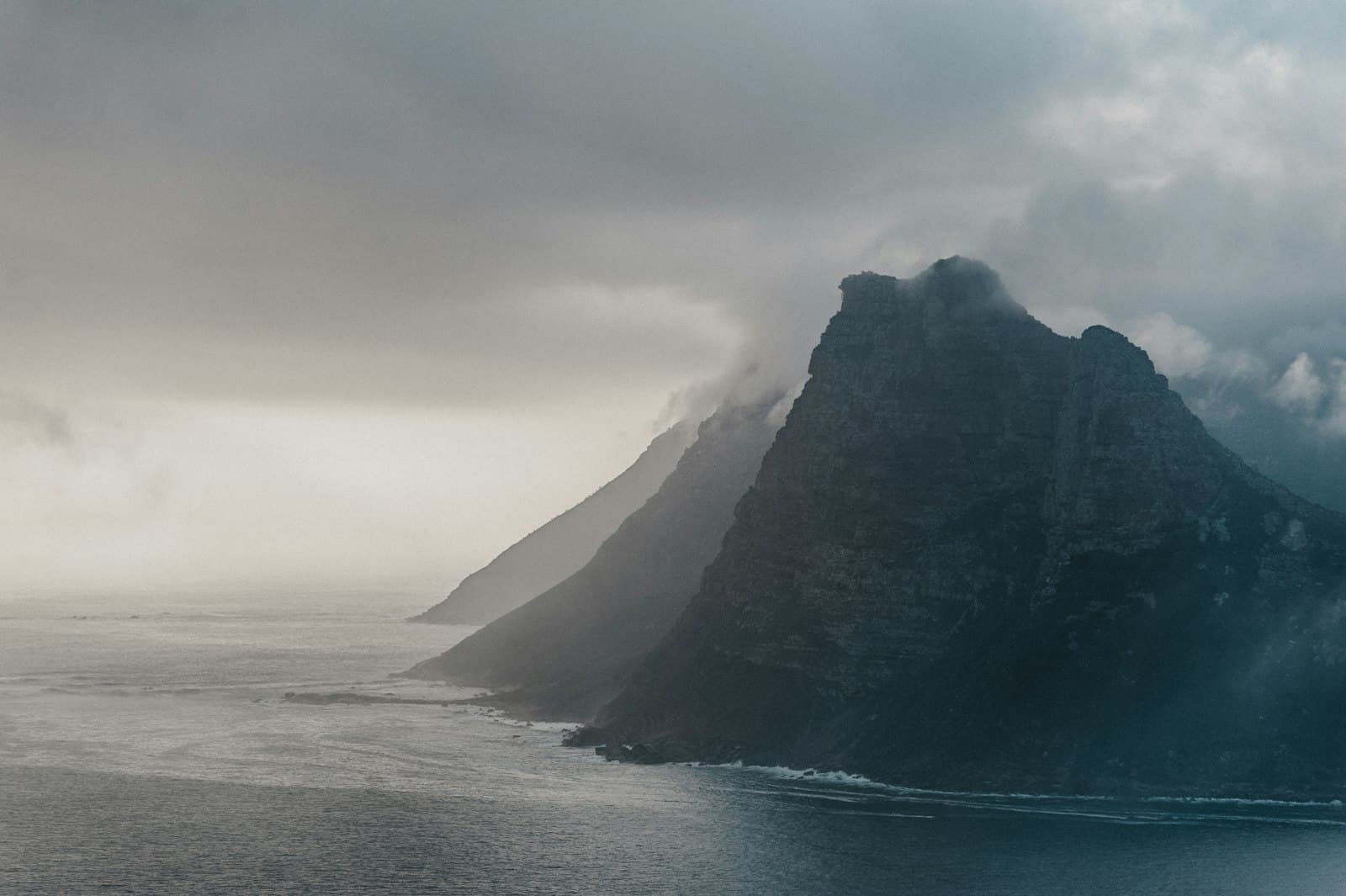
Then there is the geography. Denia sits on a corner of the coast where two completely different shorelines meet. To the north-west of the port stretch the long sandy beaches — Les Marines, Les Bovetes, Els Molins — kilometre after kilometre of gently shelving sand backed by low dunes and villas. To the south-east, the character changes entirely: the Les Rotes coast is a run of rocky platforms, tiny pebble coves and clear-water snorkelling spots that ends at the dramatic cliffs of Cap de Sant Antoni, where the Montgó massif — the 753-metre mountain that towers over the whole town — drops into the sea. Two coastlines, one departure point. Few harbours anywhere on this coast offer that kind of variety within the first half hour of leaving the breakwater.
The Les Rotes Coast: Where Every Boat Trip Should Go First
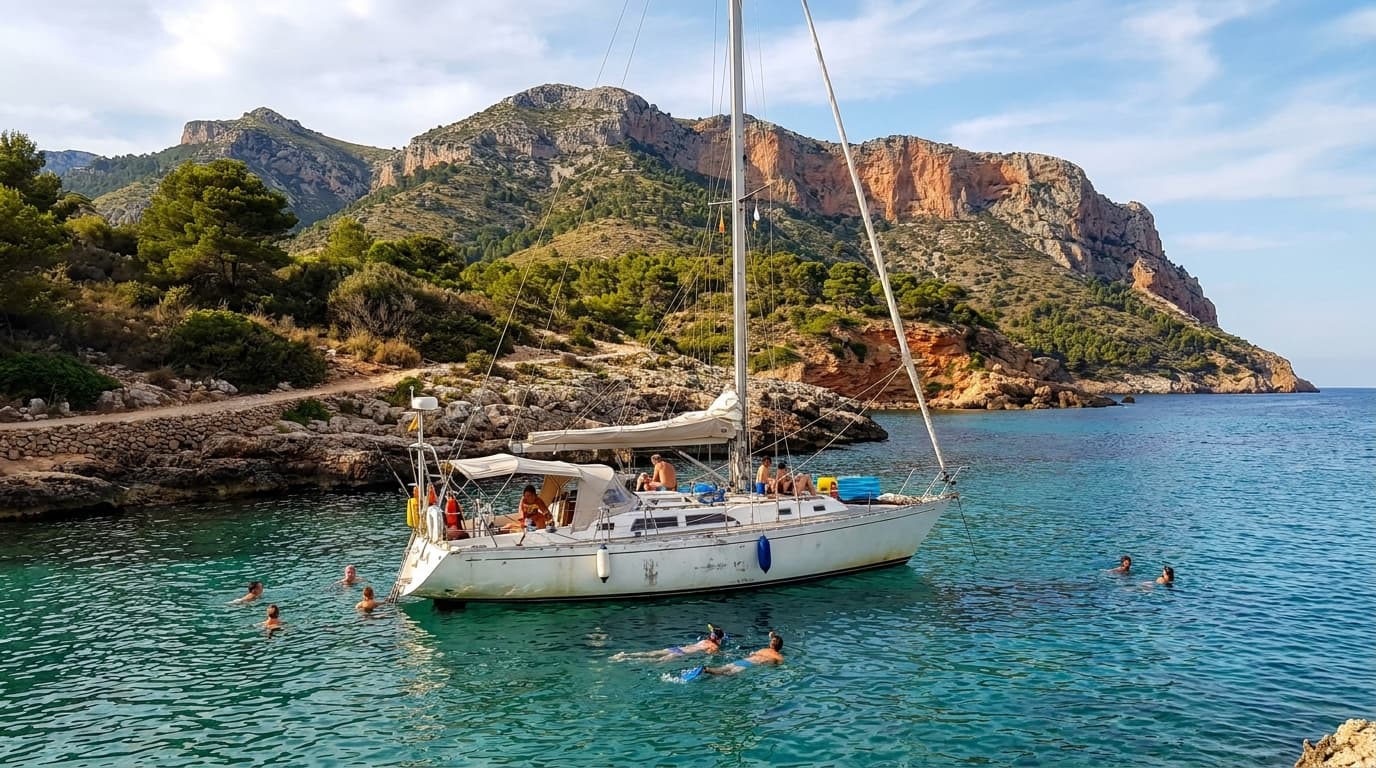
If you only have a few hours on the water, point the bow south-east. The Les Rotes shoreline is the stretch that makes Denia boat trips special: limestone platforms sliding into water so clear you can watch fish from the deck, small coves cut into the rock, and behind it all the great grey-green wall of the Montgó. The road along Les Rotes ends well before the cape, so the final stretch of this coastline — the wildest and most beautiful part — is effectively the preserve of boats, swimmers and determined walkers.
The headline feature here is the Cova Tallada, a remarkable cave at the base of the Cap de Sant Antoni cliffs that was partly quarried by hand centuries ago — stone cut from it went into buildings in Denia, including the castle. Seen from the water, the squared-off chambers glowing above the waterline are unlike anything else on this coast. Be aware that access to the cave itself is regulated in the summer months to protect it from overcrowding, with permit systems in place for entry; the rules change from season to season, so check the current situation or, better, let your skipper handle it. Even viewed from a boat holding off the cliffs, it is worth the trip.
Beyond the cave, the waters around Cap de Sant Antoni form a marine reserve, and the protection shows: the snorkelling along this stretch is among the best in the region, with healthy rocky reefs and abundant fish life in the shallows. Restrictions apply inside the reserve — another good reason to go with someone who knows the current rules.
The Rules Afloat: What Spanish Law Says Near Beaches
A short but important section, because good boating here means knowing the framework. Under Spanish state regulations (Royal Decree 876/2014, which governs the coastal zone nationwide), vessels must keep their speed down to 3 knots when within 200 metres of a beach, and within 50 metres of the rest of the coast. Anchoring inside buoyed swimming zones is prohibited. These are national rules, not local quirks, and they are enforced — the buoyed swim corridors along Les Rotes and the sandy beaches mark exactly where boats must not go.
Add to that the general Mediterranean obligation of care towards posidonia seagrass meadows — anchor on sand, not on the dark patches of seagrass — and you have the whole code of conduct. None of it is onerous. It simply means the best beach-hopping is done slowly, respectfully, and with a little local knowledge aboard.
The Honest Truth About Denia Sunsets
Here is something most promotional websites will not tell you: in Denia, the sun does not set over the sea. The coastline here faces north and north-north-east, and through the boating season the sun goes down over the land to the west-north-west, behind the mountains. If you have been promised a fiery orb sinking into the Mediterranean horizon, you have been promised the wrong coast.
What Denia offers in the evening is, in our view, better — it is just different. As the sun drops behind the hills, the light turns gold and then rose, and it falls on the things that make this bay beautiful: the long ridge of the Montgó catching the last warm light, the castle above the old town, the pale cliffs of Cap de Sant Antoni glowing against a darkening sea. From the deck of a boat lying quietly off the coast with a glass of cold local wine, the afterglow show lasts far longer than any sunset-over-water moment would. That is the honest product, and it is what a well-run sunset cruise from Denia is built around: golden-hour light on the mountain and the castle, calm evening water, and no rush to be anywhere.
Eat Before, After — or Aboard
No guide to Denia is complete without the food, because the food is half the reason to come. Denia holds UNESCO Creative City of Gastronomy status, and the emblem of the whole scene is the gamba roja de Dénia — the local red prawn, landed by the town's fishing fleet and treated with near-religious respect in the restaurants around the port. Simply boiled in seawater or flashed on a plancha, it is one of the great single-ingredient dishes of Spain. Around it orbits everything else the town does well: arroces (the rice dishes this coast arguably does better than anywhere), fresh fish from the daily market, and a serious wine list culture for a town this size.
The classic boat-day structure writes itself: coffee by the marina, a morning on the Les Rotes coast with swimming and snorkelling stops, then back in time for a long lunch of rice and red prawns. Or reverse it — lunch first, then an afternoon and golden hour on the water. There is no wrong order.
Time It Right: Bous a la Mar and the Summer Calendar
If your dates are flexible, consider the first fortnight of July. From 3 to 12 July, Denia celebrates its Festa Major, and its most famous event is Bous a la Mar — literally "bulls to the sea" — in which bulls chase the brave and the foolish along a temporary arena at the port until, inevitably, someone (often several someones, occasionally the bull) ends up in the harbour water. It is loud, chaotic, entirely local in spirit and quite unlike anything else on this coast. From a boat moored in the marina, you are a short stroll from the action; from the water, the town in festival mode is a spectacle in itself.
Outside festival dates, the season runs its usual Mediterranean course: June and September are the connoisseur's months, with warm sea, soft light and room to breathe; July and August bring the warmest water and the busiest anchorages — though "busy" in Denia remains a relative term.
Choosing Your Boat Trip: Four Ways to Do It
Rent and drive yourself. If you have boating experience, a self-drive boat rental in Denia gives you the freedom to write your own itinerary — sandy coast in the morning, Les Rotes in the afternoon, swim stops wherever the water looks best. The compact scale of the area works in your favour: nothing worth visiting is far away.
Charter with a skipper. For most visitors, a skippered yacht charter from Denia is the better choice. A local skipper knows the current access rules for the Cova Tallada, the marine reserve boundaries, the sheltered corners when a breeze picks up, and the swimming spots that match the day's conditions. You do nothing but enjoy it.
Celebrate on the water. For birthdays, hen and stag gatherings or any excuse involving a group, a boat party in Denia delivers the celebration without the crowds — your own deck, your own music, your own swimming stops, with the Montgó as the backdrop instead of a packed beach club.
Go for golden hour. And for couples, the evening cruise described above remains the signature Denia experience: quiet water, warm light on the mountain, and a coastline that saves its best colours for the end of the day.
The Bottom Line
Denia rewards travellers who prefer substance to spectacle: a real town with a real harbour, a mountain and a castle for scenery, food worth planning a holiday around, and two distinct coastlines waiting within minutes of the marina. Get out on the water — slowly past the beaches, respectfully through the reserve, hungrily back to port — and you will understand why the people who know this coast best keep coming back to its quietest corner.