Somewhere right now, an HR manager is booking a hotel conference room with a flip chart and a trust-fall facilitator, and calling it team building. The team will attend, smile politely, and remember nothing by Friday. Meanwhile, the offsites people actually talk about for years share a pattern: they take the team somewhere none of them could have gone alone, hand them something real to do together, and let the environment do the bonding that no icebreaker can manufacture.
A boat does all three at once. And Valencia — a major European city with an international airport, a working marina, and the open Mediterranean twenty minutes from the office districts — is one of the easiest places in Europe to make it happen. This guide covers why the city works for corporate groups, the team-building formats that work on the water, the shoulder-season economics that make finance departments smile, and the questions to ask an operator before you sign anything.
Why Valencia Works for Team Building
Getting everyone there is easy. Valencia's airport has direct connections across Europe, and it sits about twenty minutes from the city centre — a team flying in from three different countries can be at the marina by lunch. For distributed companies, that convergence logistics problem is usually the offsite's biggest cost and headache; here it mostly disappears.
The weather shows up for work. Valencia sits on one of Spain's sunniest coasts, with a sailing season that runs meaningfully from March into November. You can plan an outdoor offsite months ahead with a confidence that northern Europe simply cannot offer — and the mild months bracketing summer are, as we will see, exactly when corporate groups get the best of it.
The city carries the rest of the agenda. An offsite is rarely just one activity. Valencia surrounds the boat day with everything else a corporate itinerary needs: a walkable old town, a long urban beach, a celebrated food scene from paella institutions to Michelin ambition, and venues for the strategy sessions and dinners that frame the fun. The marina district alone can host the entire day — meeting in the morning, boats in the afternoon, dinner on the waterfront.
It costs less than the places it outperforms. Compared with the established corporate-event coasts — the Côte d'Azur, the Balearics in season — Valencia delivers comparable water, better logistics, and materially lower rates for boats, hotels, and restaurants.
Team Building Formats on the Water
Not every team wants the same day, and the beauty of a charter fleet is that the format can match the culture. Three proven shapes:
The Regatta Day: Competition That Actually Requires Teamwork
Split the group across several matched sailing yachts, each with a professional skipper, give them a short course, and race. Sailing is the rare corporate activity where the teamwork is not a metaphor: a boat only moves well when grinders, trimmers, and helm coordinate, and every crew member has a real job within minutes of leaving the dock. No sailing experience is needed — skippers teach as you go — and the mixed-ability crews level hierarchies fast: the intern who turns out to have good hands on a winch outranks the CFO for the afternoon. This format, built on our sailing experience days, is the one that generates the most retelling back at the office.
The Catamaran Day: One Deck, Whole Team
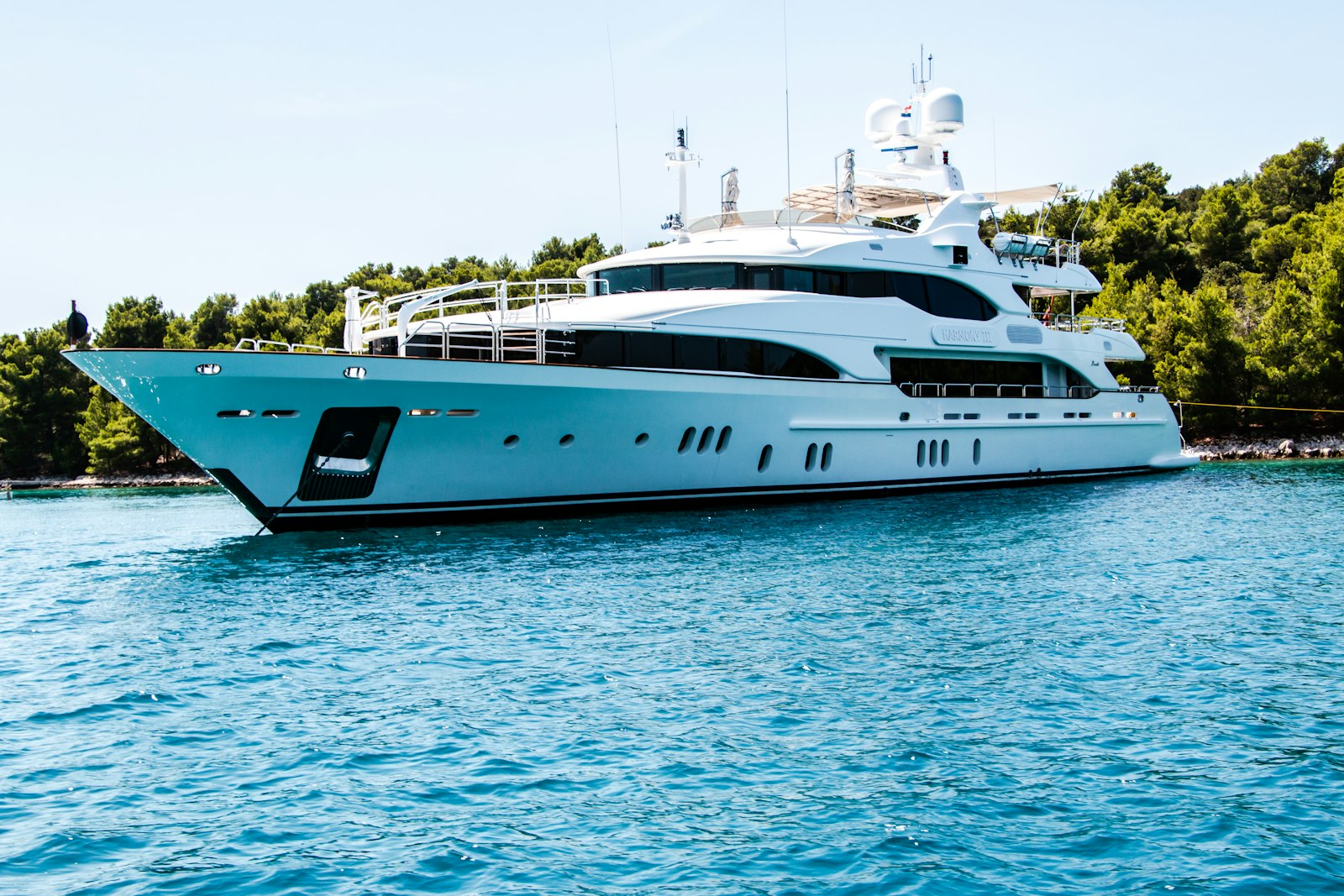
For groups that want shared experience rather than competition, a spacious catamaran charter puts the entire team on one stable platform: nets to lounge on, shade when wanted, room to move between conversations. Cruise down the coast, anchor for a swim in open water, eat well on deck. Catamarans are also the forgiving choice for mixed groups — stable enough for the seasickness-wary, roomy enough that nobody is trapped in one conversation for four hours. It is the closest thing to a floating terrace, and it works for teams from eight to several dozen across multiple hulls.
The Relaxed Skippered Cruise: The Conversation Venue
Sometimes the goal is not activity but altitude — the leadership conversation, the small-team reset, the celebration of a shipped project. A skippered yacht with a handful of people aboard is a remarkable meeting room: phones stay in bags, nobody leaves early, and something about a horizon makes people talk differently than they do under office lighting. Pair it with a day-trip itinerary and lunch at anchor, and you have the format executive teams rebook annually.
The Shoulder-Season Advantage
Here is the scheduling insight that separates experienced offsite planners from first-timers: the best corporate months on this coast are not July and August. They are September, October, and the March-to-May window.
The logic runs in the company's favour on every axis. The weather in those months is warm without being punishing — far better suited to colleagues in varying states of sun tolerance than a 35-degree August afternoon. The sea is quieter, the marina calmer, and restaurant bookings for twenty are a phone call rather than a negotiation. Boat availability is far wider once the summer leisure crowd departs, and shoulder-season rates reflect it. And from the team's perspective, an offsite in October or March lands in exactly the stretch of the work year when morale needs it — not in the summer window when half the company is on leave anyway.
Charter operators know this too: corporate demand is precisely what fills the non-summer calendar, which means operators court it — better boats, better terms, more flexibility on timing than any June Saturday will ever offer. For a deeper view of the coast's calendar, see our guide to the best time to charter a yacht in Valencia.
Group Logistics: Getting Everyone Aboard
A few practical realities that make corporate water days run smoothly:
- Size the fleet, not the boat. Up to about 12 people fit one comfortable yacht. Beyond that, think in multiples: two or three boats sailing together beats one crowded hull, and it enables the regatta format besides.
- Plan for the non-swimmer and the sceptic. Every team has both. Skippered boats, stable catamarans, and a no-pressure culture around the swim stop mean both finish the day converted — but only if the format was chosen with them in mind.
- Half-day is the corporate sweet spot. Four hours on the water — typically an afternoon into early evening — delivers the full arc without colonising the whole agenda. Full days work for pure-celebration events.
- Confirm numbers late, book early. Good operators hold a boat on estimated headcount and let you true up close to the date — ask for this explicitly.
- Capture it. A photographer on board costs little against the event budget and supplies a year of internal comms material; our notes on event photography on a yacht explain what works.
Combining Land and Sea in One Day
The strongest one-day agenda we see, refined across many corporate seasons, is a simple sandwich: substance, sea, table. Morning workshop or strategy session at the hotel or a marina-side venue while minds are fresh. Midday transfer — on foot, if you chose the venue well. Afternoon on the water: regatta, catamaran, or cruise, ending as the light turns golden. Evening dinner on the waterfront or in the old town, where the afternoon's stories are already being embellished.
The boat block placed after the work block is deliberate. It gives the morning a finish line, converts the afternoon into the reward, and — as any facilitator will confirm — the conversations that happen on deck after a shared morning agenda are the ones the offsite was actually for. Teams staying a second day often add a sunset slot; our honest guide to the Valencia sunset cruise explains what that evening really looks like on this east-facing coast.
What to Ask an Operator Before Booking
Five questions that sort professional corporate operators from summer party outfits:
- Can you invoice properly? Company billing, VAT documentation, and a contract — table stakes, but ask.
- What is the weather policy? You want a named rescheduling and refund position in writing, not reassurance.
- Who exactly is on board? Skipper qualifications, crew-to-guest ratio, and whether a host is included for larger groups.
- What does catering actually include? On-board paella, cold platters, open bar or consumption-based — get the menu, not the adjective.
- Can you scale if headcount moves? The answer reveals fleet depth better than any brochure.
Our corporate event yacht page covers formats and fleet in detail, and for larger or multi-day programmes we build itineraries directly with the organiser. Tell us the team size, the month, and what the event needs to achieve — competition, connection, or celebration — and we will send you a concrete proposal, not a brochure. The flip-chart room will still be there next year; the water is better.